DBT Referrers

Referring to our DBT programs

Clear pathways, structured programs and collaborative communication.

Who refers to our DBT programs

We regularly receive referrals from:

We prioritise stable communication and coordinated care.

  • General practitioners
  • Psychiatrists
  • Public and private hospital teams
  • Community mental health services
  • Private psychologists
  • Headspace-style services
  • NDIS providers and support coordinators
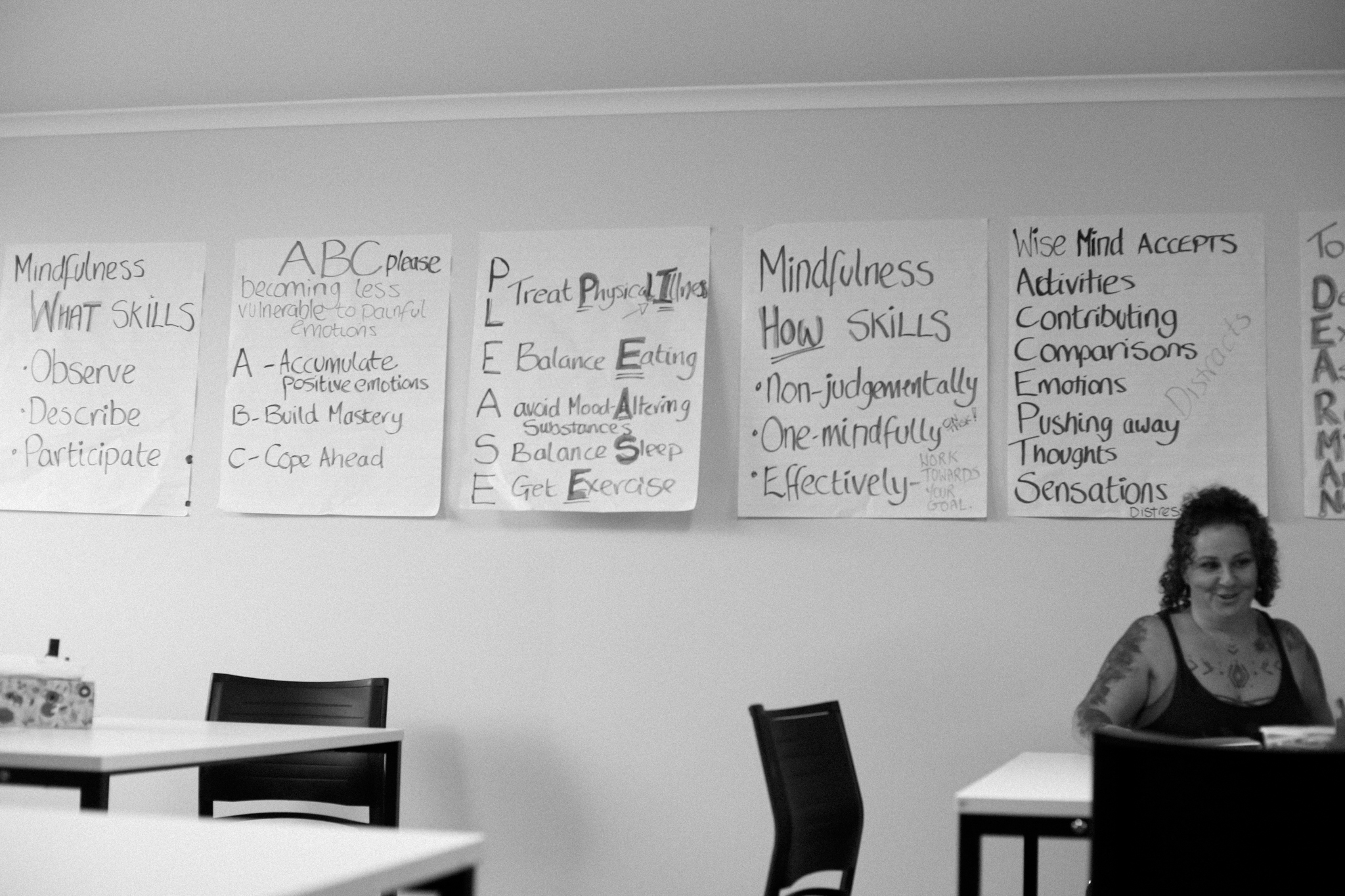
Life Mental Health DBT group room with facilitators and participants in session

Program overview

Our Comprehensive DBT Programs include weekly individual DBT therapy, a DBT skills training group, between-session phone coaching and weekly therapist consultation.

Programs are available in-person on the Sunshine Coast and via our structured telehealth pathway across Queensland and Australia-wide.

DBT facilitator reviewing clinical notes — structured care and coordinated treatment

Clinical presentations commonly referred

We accept referrals for adults and adolescents presenting with:

Where appropriate, we collaborate with treating psychiatrists and care teams.

  • Borderline personality disorder
  • Chronic self-harm
  • Suicidal ideation that is non-acute
  • Severe emotional dysregulation
  • Impulsivity
  • Recurrent relationship instability
  • Complex trauma presentations

Inclusion criteria

Participants should:

Comprehensive DBT requires commitment.

  • Be willing to commit to both individual and group sessions
  • Be able to attend consistently
  • Engage in behavioural agreements
  • Have external crisis supports in place
  • Demonstrate readiness for structured therapy

Exclusion considerations

We may defer intake where:

We are happy to discuss borderline cases prior to referral.

  • Acute inpatient care is required
  • Active psychosis significantly impairs engagement
  • Severe substance dependence prevents participation
  • Risk level exceeds outpatient suitability

Referral process

We aim to respond promptly to new referrals.

  • Referral received via GP letter, psychiatric report or online referral form
  • Screening call to assess suitability
  • Intake assessment
  • Program placement
Life Mental Health clinician in consultation — collaborative care with referring professionals

Communication with referrers

With participant consent, we provide:

We value collaborative treatment.

  • Intake confirmation
  • Program acceptance updates
  • Progress summaries where clinically appropriate
  • Risk communication where required
  • Discharge summaries

Medicare & funding pathways

Participants may access DBT programs via:

Funding suitability is clarified during intake.

  • Private fees
  • Medicare rebates where eligible
  • NDIS funding in certain cases

Telehealth referrals (regional & remote)

We accept referrals for participants located outside the Sunshine Coast where telehealth DBT is appropriate.

Referrers should ensure:

  • Local crisis supports are available
  • Participant has stable internet and private space
  • Telehealth is clinically appropriate

Frequently Asked Questions

Is your DBT program adherent to the full model?

Yes. We follow a comprehensive DBT structure including individual therapy, skills group and consultation team.

Can participants attend only the skills group?

For comprehensive DBT, both individual and group components are required.

Do you accept high-risk clients?

Yes, where outpatient DBT is clinically appropriate and supported by external crisis pathways.

How quickly can intake occur?

Timeframes vary depending on program capacity, but we aim to respond promptly.